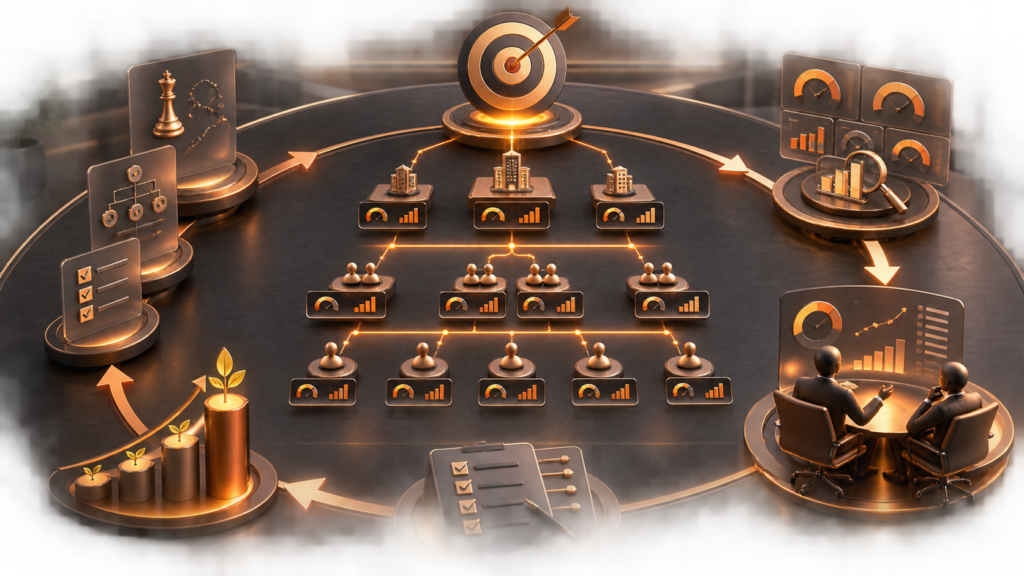
Translate Strategy into Clear, Accountable Performance.
Build an integrated system that connects organizational priorities with team and individual goals—supported by meaningful KPIs, continuous performance conversations, and disciplined review.
The Business Challenge
WHEN PERFORMANCE MANAGEMENT BECOMES AN ADMINISTRATIVE EXERCISE
Many performance systems appear complete on paper: KPIs are assigned, forms are submitted, and ratings are finalized. Yet goals are not consistently linked to strategy, measures reward activity rather than results, and performance expectations vary across functions and organizational levels.
When performance is discussed only at the end of the cycle, problems surface too late. Managers rely on subjective judgment, employees lack timely feedback, and ratings become difficult to defend. The process is completed—but accountability, development, and business performance do not improve.
Our Approach
A strong performance management system aligns what the business must achieve with how performance is set, reviewed, discussed, and improved.
01.
02.
03.
04.
PERFORMANCE ARCHITECTURE & GOVERNANCE
GOAL & KPI ALIGNMENT
PERFORMANCE REVIEW & CALIBRATION
FEEDBACK & PERFORMANCE IMPROVEMENT
A clear framework defines the performance cycle, roles, governance, evaluation principles, and connections between organizational, team, and individual performance.
Strategic priorities are translated into outcome-focused goals, relevant KPIs, balanced weightings, and calibrated targets to ensure alignment and comparable performance expectations across functions and levels.
Structured review rhythms, evidence standards, rating criteria, and cross-manager calibration strengthen the consistency, fairness, and credibility of performance decisions.
Continuous feedback, manager conversations, development planning, and structured underperformance actions turn performance reviews into meaningful improvement.
Deliverables & Business Outcomes
Performance management creates value when it shapes priorities, decisions, and conversations throughout the performance cycle—not only when final ratings are submitted.
WHAT YOU RECEIVE
Performance management architecture, governance, and cycle
Cascaded goal and KPI framework across organizational levels
KPI definitions, weightings, target-setting, and calibration guidelines
Performance review, feedback, and rating-calibration mechanisms
Supporting templates, implementation priorities, and change roadmap
BUSINESS IMPACT
Strategic priorities are translated into measurable accountability
Performance expectations become clearer and more consistent across levels
Performance gaps are identified and addressed earlier
Reviews and ratings become more evidence-based and credible
Managers are equipped to drive stronger performance conversations and continuous improvement
Performance Dhould Be Driven, Not Merely Rated
A completed appraisal does not improve performance. Clear goals, evidence-based reviews, and meaningful performance conversations do. Let’s build a system that turns strategy into accountability and performance insight into action.